


Adventures
with a
1923 P & M
(the
photos use a slide show type of presentation, just click any photo to
start there.)
"The P&M motorcycle is as simple as
it's possible for a motorcycle to be" - so says the first
line in the bikes instruction book. Now that is a bit of an
understatement, I must say.
The story starts back in April 2010 when I had an email from James
Hewing at
HQ saying that the club had been given the loan of a 1923 P&M
motorcycle and how would I like to be the first custodian and use it
during my Presidential year. Initial thoughts were ' what on earth do I
want another bike for, I've got 23'. Anyway, it's always possible to
squeeze another solo in the garage so I said ok. James then said that
there was a write-up in the May 2010 Journal that was out the following
week. With glee, I opened the envelope and flicked through the pages
looking for pictures of this new charge that I had taken on.
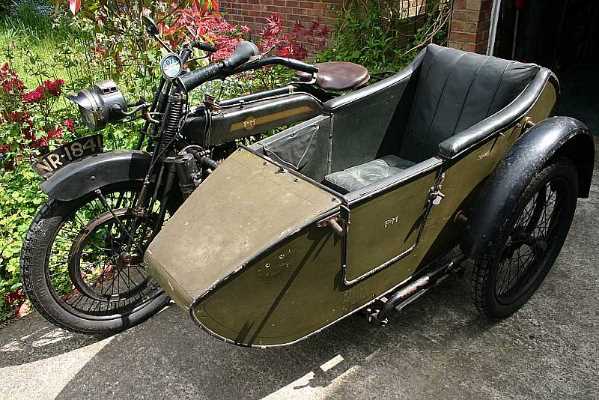
When I saw the photos I was amazed to see that it had a sidecar - how
on earth was I going to find space in the garage for that. It took two
days of tidying and re-arranging things before I came up with the room
needed to house the outfit. To be honest it was the last thing that I
needed as I already had two outfits, still, I'd said ok.
The next job was to collect it. Jean and I had entered the Burton
Parade with our Indian on the 9th May and after a couple of
emails to check
the size of the outfit, I decided that it would be best to leave the
Indian at home as trailer space may not have been enough to carry both
machines, so we headed for Burton with an empty trailer. My job at the
event was to flag everyone off and then at the end present all the
prizes. Duty done we got away about 5pm and set off to collect the new
stable mate. I suppose that it was around 9pm when we eventually
arrived home and
unloaded the outfit. I sat on the bike and rolled it down our drive,
stopping just outside the garage door. Jean, who watched it all said
"Bloody hell, we have a bike with brakes". Personally I think she's
losing her sense of adventure, who needs brakes?
So, back to where we came in and the Instruction book - am I glad there
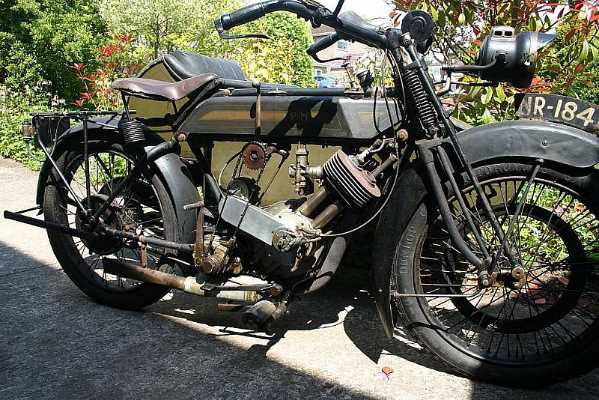
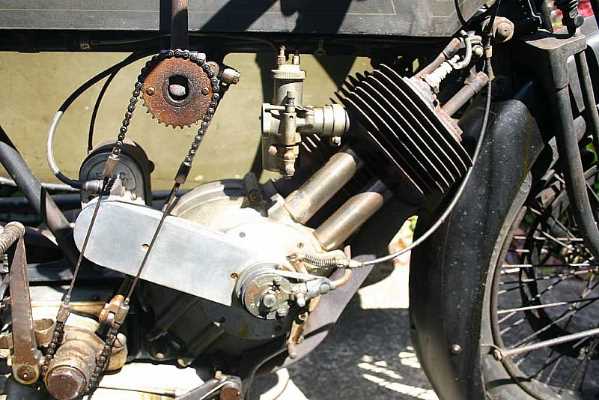
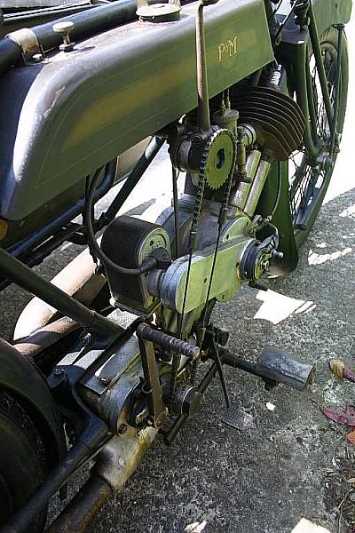
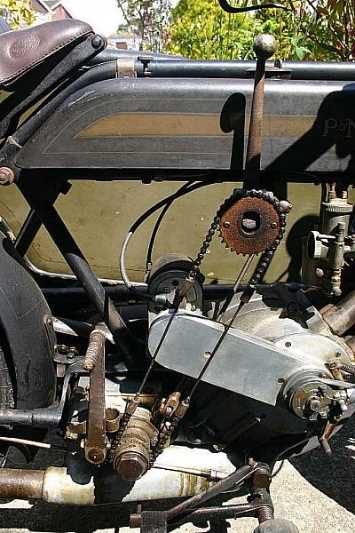
is one. The bike is a four speed 4.5hp side valve. Something around
555cc, but how does it work? there's no clutch lever. Harry Wiles, who
took the bike for an MOT, reckoned that it had a four speed David Brown
gearbox, but that didn't come in until 1924. However, the 1923 model
does have four speeds, and they're found through a two speed gearbox
being driven by two primary drives of different ratios. Have you
figured that yet? It seems that the clutch is operated by wedges that
open out the clutches inside each drum - a bit like those on a two
speed
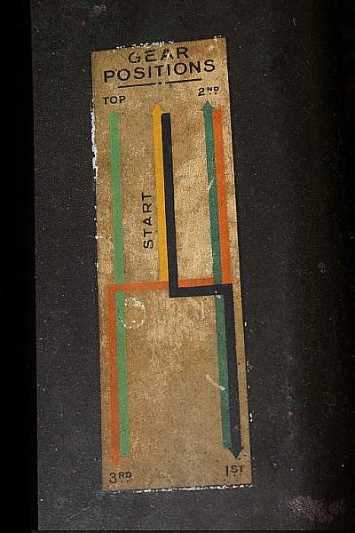
Scott, I suppose. Each gear comes in as the lever is pushed into its
slot in the quadrant, like a H gearchange on a car. As the lever is
moved from the neutral centre it operates the clutch - easy really, at
least I hope so.
Briefly,
the history behind the outfit is that it was acquired by Angus Martin
in 1950 and he passed away in 1990. The bike remained with the Martin
family and was loaned out to a nephew in Northern Ireland who replaced
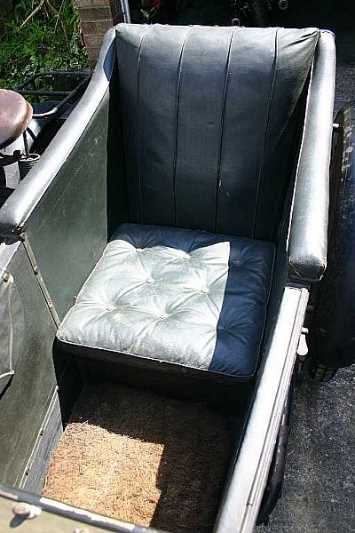
the gas light tubing and treated the woodworm under the seat in the
sidecar - a fact that Jean was not happy knowing about, as she was
going to be the one to sit in it. Anyhow, the nephew wanted to 'spruce
the outfit up a bit' and the family refused, as they wanted to
keep the bike in it's 'as found' condition. I've just spent a couple of
hours with the bike and must say that it is a really lovely time
capsule. It's 87 years old and is exactly as it left the factory all
those years ago - as someone said to me once, "you can restore a bike
any time, but you cannot re-create originality". How true that is. Have
a really good look when you see the outfit as Jean and I hope to give it a
few outings this year. It comes complete with a tonneau cover and an
adjustable windscreen - both of which will be too fragile to use.
Having
said that, it was noticed that the sidecar light had been stolen when
the outfit was on display in the Stanford Hall Museum. What
hasn't been noticed is that the light generator for the sidecar lamp is
also missing. Ivan Rhodes has kindly donated a lamp that I will have to
sort a clamp for. Another thing that has gone walkabouts is the
original tax disc holder, the outline of which can be seen on the
sidecar body. None of these small problems will keep
the
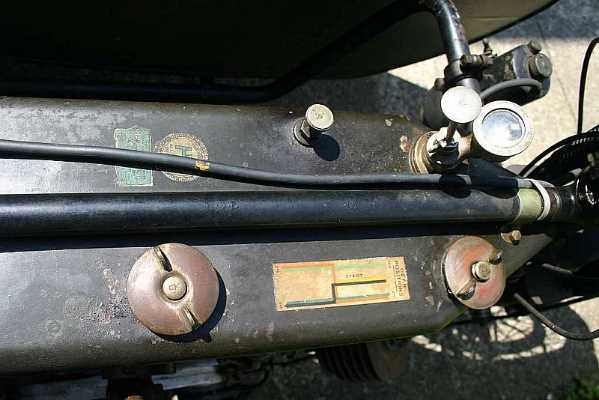
outfit off the road - but the broken oil pump may and that is something
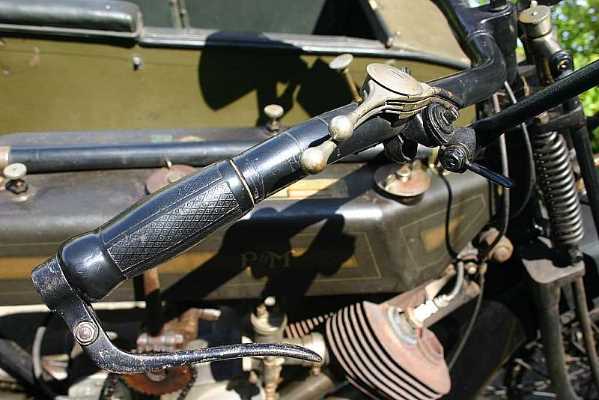
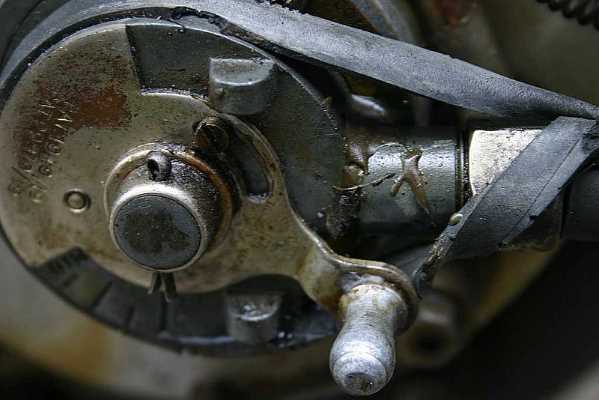
that I have to look at. I did wonder why there was a piece of inner
tubing acting as a rubber band around the feed pipe to the oil pump,
basically it's there to keep the pump together. There are also signs
that it has been repaired with araldite - see a photo of the pump
lash-up below. All
will
become clear when I take it apart for investigations. Meanwhile watch
this space as each outing that the bike takes will be recorded here.



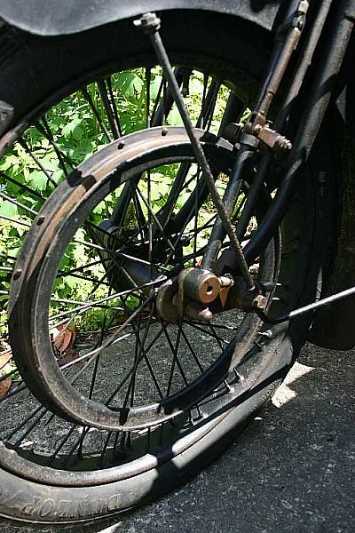
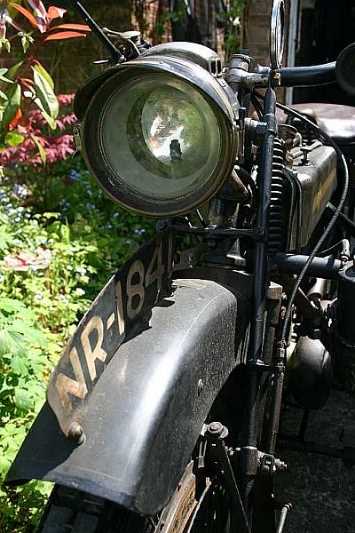
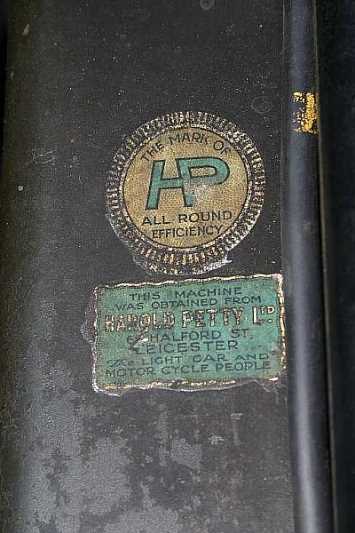

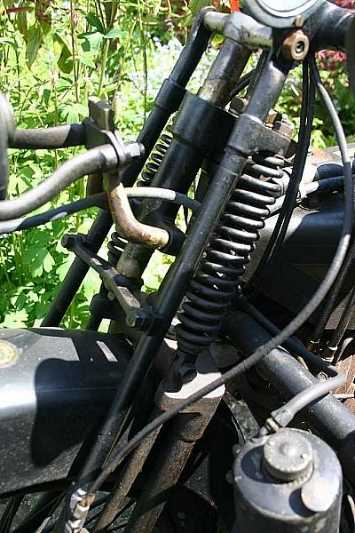
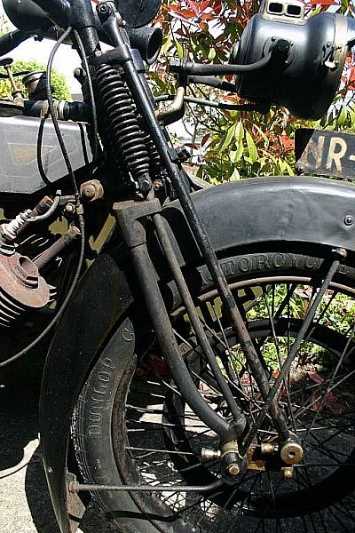
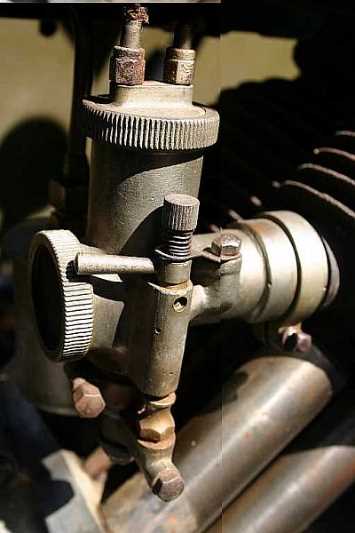
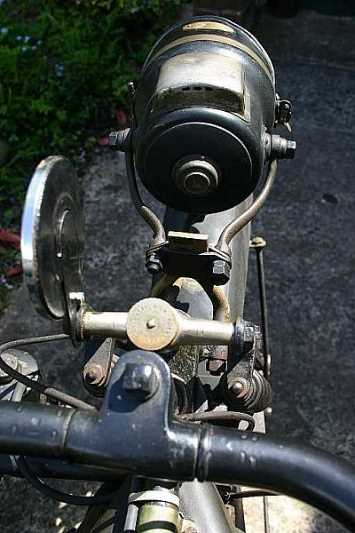

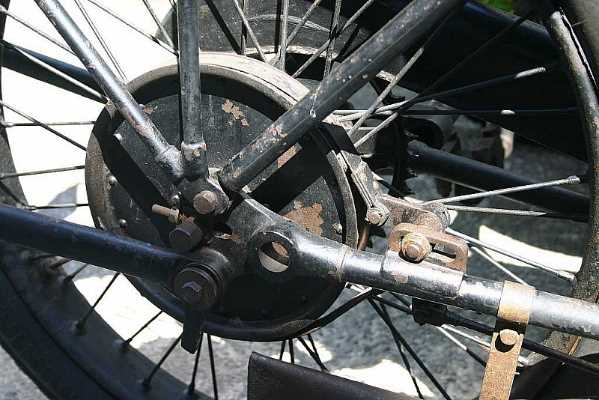
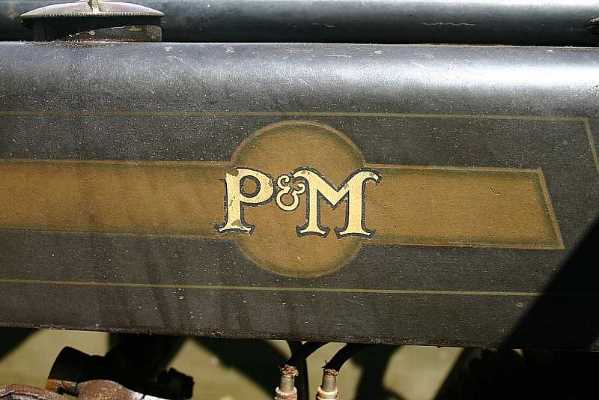

With
the pump stripped I had it looked at by an expert, with a view
to
getting it welded, however, the pump body turned out to be made of
Mazak. It's that horrible stuff that is used to make cheap castings and
crumbles eventually, making it impossible to repair. A 'proper' job was
tried using JB Weld, which is 
 a
magic stuff, but to no avail on this occasion. As soon as I fitted the
pump and tried to
tighten the union nut for the oil pipe the repair just broke off. Only
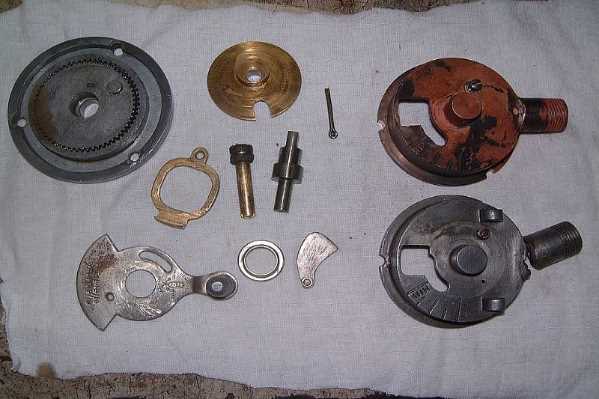
one thing for it but to make a new pump body. This is the pump
all
dis-assembled and showing the problem with the pump body.
a
magic stuff, but to no avail on this occasion. As soon as I fitted the
pump and tried to
tighten the union nut for the oil pipe the repair just broke off. Only
one thing for it but to make a new pump body. This is the pump
all
dis-assembled and showing the problem with the pump body.
What to
make the body out of was a dilemma - aluminium, brass, bronze. In the
end I plumped for bronze and obtained a nice big chunk for machining.
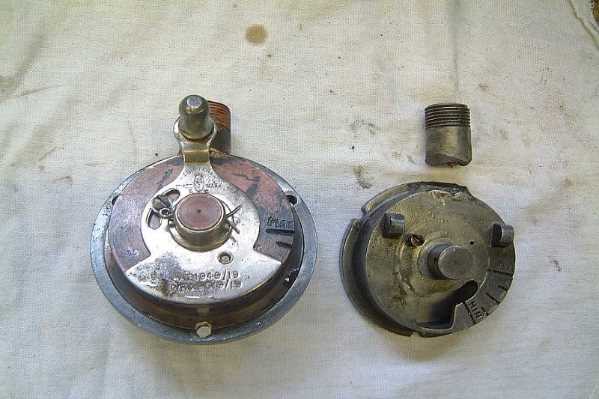
Not an easy, or quick, job at all. Anyway, I machined the new body and
silver
soldered the connecting stub on with it's 3/8 BSP thread. Next job was
to re-assemble the pump. I must say that I have never seen such a
complicated piece of engineering in all my
life. Why make something simple when it can be made complicated.
 The
workings took some figuring out, I can tell you, as when I
dis-assembled the pump, all the parts dropped onto the bench, which did
not give me the opportunity to study how it was assembled. In the end I
was able to figure out what every part did and it all went back
together ok.
The next job was to refit the pump to the motor and see if it worked
properly.
The
workings took some figuring out, I can tell you, as when I
dis-assembled the pump, all the parts dropped onto the bench, which did
not give me the opportunity to study how it was assembled. In the end I
was able to figure out what every part did and it all went back
together ok.
The next job was to refit the pump to the motor and see if it worked
properly.
After a week in Scarborough at the end of June, riding
our Morini, we returned home and after a small amount of maintenance
work on the
Morini I fitted the rebuilt pump to the P&M. I was a bit
worried
concerning the new pump body in that it mustn't look too new, and even
though it's made of bronze, I resisted the temptation to clean it up.
As it happens, the silver soldering gave it a
slightly aged look. I'm sure that it will weather in even more in time.
5th July - Instruction
manual out - and read about how to prime the pump - not too difficult,
thank goodness. Now to run the motor for the first time since Harry
took it for an MOT. It was a case of deciding which control did what
and then start the motor. Second kick and she was away. I've never
heard such a sweet sounding engine in all my life - now, at last, for a
ride. Guess what? after weeks of sunshine, the weather decided to turn
today and outside the garage it was pouring down, so the first outing
was postponed. The oil pump? - it worked like a dream,
delivering dribbles of oil every so often, just as it should.
6th
July - The day after fitting the pump, it was time for the first ride.
It was recommended that I swap the throttle controls to the left hand
handlebar so as to be able to operate the gear lever with the right
hand, so that was done. Easing off down the road and there was quite a
bit of clutch slip in first gear, second was ok, third had slip and
top, or fourth gear, was fine. Loads of power from the motor and I did
enjoy the ride around our village. Next job is to tighten up the
controls as the throttle and air levers did not stay put without
keeping a hand on them, easy job that. Also the gear lever needed
tightening so as to hold the clutch in. After checking the gear lever
movement it looked as though it was on maximum travel for first and
third - so it seemed that some investigation may need to be done so as
to diagnose the problem and get the gear to lock home. However, another
run is called for before taking anything to bits as it may well settle
down.
Moving
on in time and another ride on the bike did not show any improvement
with the first gear clutch, so some investigative procedures were
called for. The handbook says that it is possible to add shims to the
wedges that operate the clutches and that in an emergency pieces of tin
can be used but they should be replaced with 'properly' ground shims
that only the factory can provide. Obviously a case of the manufacturer
trying to retain the work of rectifying any fault. So, as P&M
don't
exist any more, it was a case of me taking it apart and trying to sort
it out. Not an easy thing at all as the mechanism is quite complicated.
My usual method of take all the screws and bolts out and shake, needed
a
bit more thought this time. Anyway, as I stripped the clutch units it
soon became apparent as to how they worked and I could see where the
shims would go. I cut some that were 15 thou thick, fitted them and
found that the clutches were not clearing properly - in the end and
after several trial fittings I found that 7 thou was about right to
take up the wear. Another run around the village and I now had a
working first and third gears. The other thing was that I found that I
could manage all the controls with the throttle and air levers back on
the right hand side, it just didn't feel right with them mounted on the
left hand handlebar.
I now felt confident that the bike
would perform ok on a run and on perusing the club calendar settled for
the Cotswolds Sections 'Sidecar and three-wheeler run' on the 1st
August from Tewkesbury.

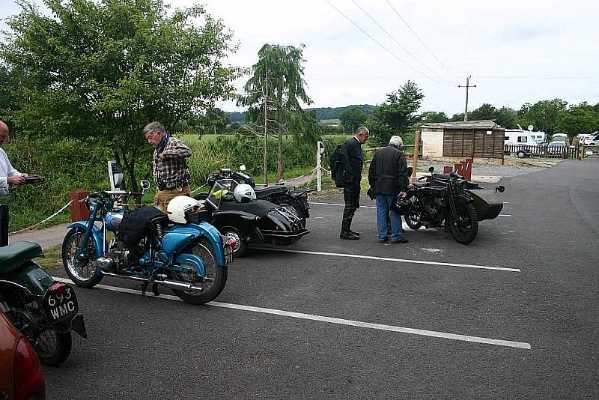 The
day soon dawned and the outfit was loaded onto our trailer. Full of
confidence Jean and I arrived at the Haw Bridge Inn on the banks of the
Severn and were soon on the road following Fred Smith's BSA Vee twin
outfit. I found that the P&M was happiest travelling at just a
bit
slower than Fred's BSA. My oil pump repair was working well with around
some 35 to 40 drops per minute showing in the glass - just about right.
The
day soon dawned and the outfit was loaded onto our trailer. Full of
confidence Jean and I arrived at the Haw Bridge Inn on the banks of the
Severn and were soon on the road following Fred Smith's BSA Vee twin
outfit. I found that the P&M was happiest travelling at just a
bit
slower than Fred's BSA. My oil pump repair was working well with around
some 35 to 40 drops per minute showing in the glass - just about right.
We
must have covered some 30 odd miles and were in fine form with the
lusty engine pulling well - I was enjoying the ride, I must say.
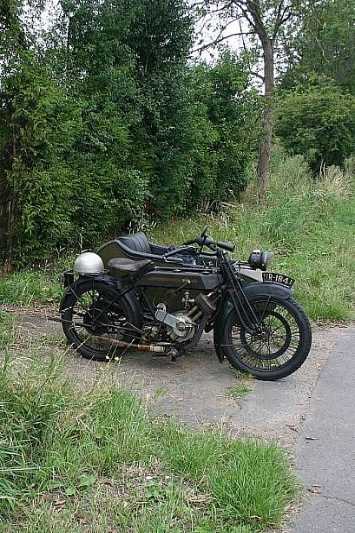 Then
it happened - on pulling out of a side turning onto the main A44 road
from Evesham to Worcester the bike just decided to stop running. Out
came the tools. Plug checked ok, poor spark seemed to be the problem.
Mag points adjusted, carb stripped and cleaned, just in case. Nothing
was wrong apart from a very weak spark. The only way a spark could be
seen was by closing the plug points gap right down - an old dodge that
I'd always used with success on Villiers two-strokes in the past. The
motor would give a few beats on tickover but died as soon as the
throttle was opened. Diagnosis - the Mag needed overhauling, after all,
it probably hadn't been touched in it's 87 year existence. Luckily
there were a few of the other riders still with us and Bob Ashwin rang
a friend called Phil (can't remember his surname, I must say) and Phil
agreed to collect us with his Transit van and take us back to the Haw
Bridge Inn.
Then
it happened - on pulling out of a side turning onto the main A44 road
from Evesham to Worcester the bike just decided to stop running. Out
came the tools. Plug checked ok, poor spark seemed to be the problem.
Mag points adjusted, carb stripped and cleaned, just in case. Nothing
was wrong apart from a very weak spark. The only way a spark could be
seen was by closing the plug points gap right down - an old dodge that
I'd always used with success on Villiers two-strokes in the past. The
motor would give a few beats on tickover but died as soon as the
throttle was opened. Diagnosis - the Mag needed overhauling, after all,
it probably hadn't been touched in it's 87 year existence. Luckily
there were a few of the other riders still with us and Bob Ashwin rang
a friend called Phil (can't remember his surname, I must say) and Phil
agreed to collect us with his Transit van and take us back to the Haw
Bridge Inn.
This was a bit of a shame, as I had arranged to meet
some of the Martin family at the lunch stop, which was only 10 odd
miles away, so that they could see the bike being used on the road once
more. So, apologies for our no-show were forwarded with one of the
other riders.
After getting home I had five days before we were
due to set off for Scotland for ten days to ride the triple and then on
return from that we were to go to Belgium for the OKP, quickly followed
by eleven days at the Manx Rally on the Isle of Man. Anyway, I soon
removed the
EIC magneto and took it to my good friend Ian Smith in Swansea for him
to work his magic on. He confirmed that it needed a rebuild and I
left it with him saying that I wanted it back in good working order,
but still retaining it's patina, and hopefully in about a months time.
A
month later, on return from the Manx rally, there was the mag
sitting on our hall table. One of our members had collected it and
returned it whilst we were away on the Isle of Man. Next job - fit and
time the magneto and look for another suitable run on the club
calendar. I pencilled in a social run(weather
permitting) being organised by the Cotswolds section on the 17th
October. I did think about the Levis cup road trial but decided against
that - knowing the event. It would prove just a bit too tough for the
P&M at this point, as the bike was still a bit of an unknown
quantity.
Well,
the 17th of October came and the weather was promised to be good.
Having been at the Classic Mechanics show in Stafford on the 16th and
getting home late I decided to load the P&M early the following
morning. Jean had decided to stay home this weekend so I persuaded
Stewart to come with me and act as ballast in the sidecar. We set off
for Severnhampton and the site for the day of a gathering of
stationary engine enthusiasts. They knew that we were coming
as
I'd arranged to leave the car and trailer there and ride the outfit to
the start - that way the car was available when we returned with the
run, as the engine show was to be the finish. What a glorious day it
was as Stewart and I unloaded the bike. After a cuppa and a bacon roll
we were out on the road and heading for the Mount Inn at Stanton and
the start of the social run. The bike ran very nicely - mag working ok
- oil pump working ok - all was well with the world. We were first to
arrive at the start but were soon joined by a dozen or so others. The
social run was to work on the drop-off system which is so easy to
operate. The Cotswolds section use it a lot for their social runs where
no route card is involved. It was over all too soon, ending back at the
stationary engine gathering. The bike performed faultlessly I must say
and Stewart and I both agreed that the day had been first class - a
ride with like minded enthusiasts - a bike that was a pleasure to ride
- the scenery of the Cotswolds - the exhibition of engines to view at
the end - I could go on and on.

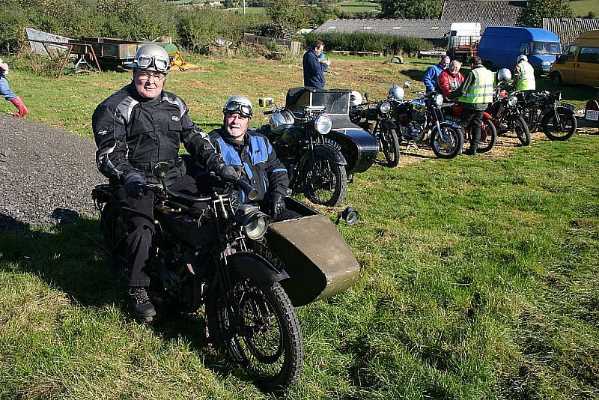
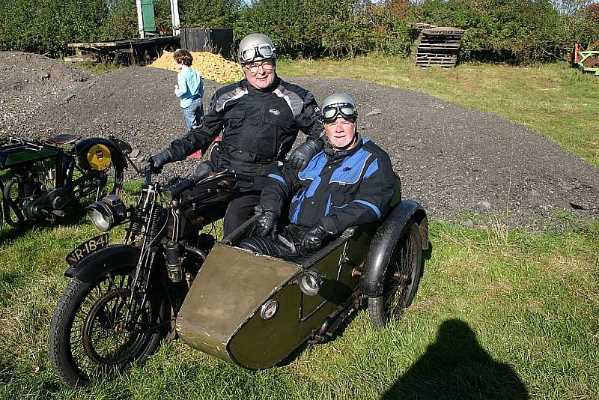
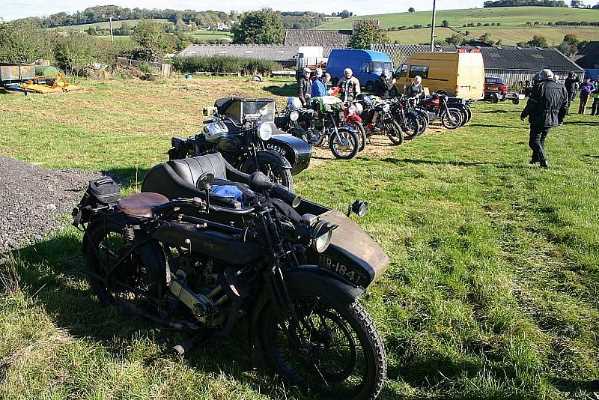
During the winter I decided to make up a new tonneau cover as the
original was in quite a delicate state and can be seen in one
of the
following photos. A good friend of mine sewed up a tonneau
using some double duck off cuts, which all cost nothing. Going back
some years, and during
the time that the outfit was on
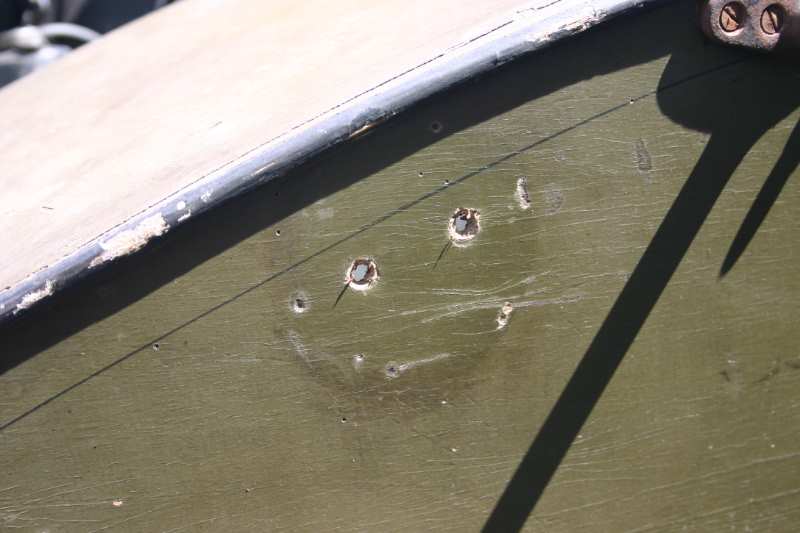
display in the Stanford Hall museum, some light fingered person had
stolen
the sidecar light and associated gas generator along with the licence
disc holder. Ivan Rhodes kindly supplied a replacement lamp and
I made the
tax disc holder. A suitable gas generator is still needed.
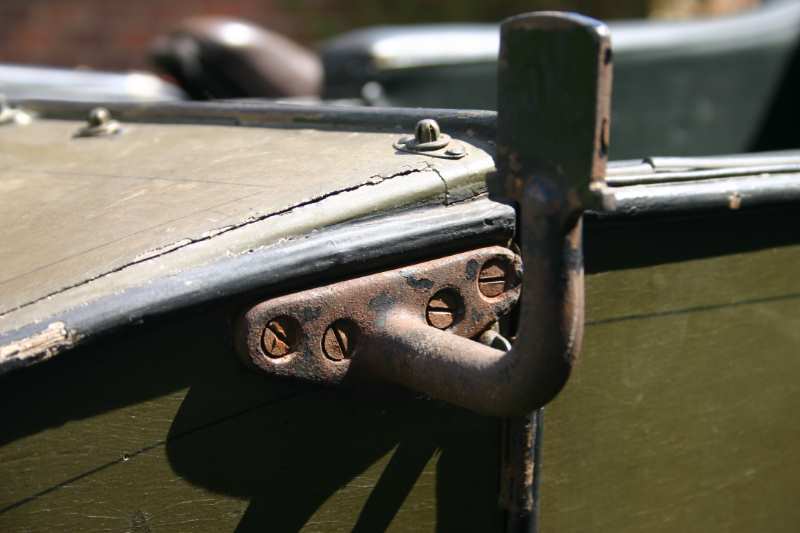


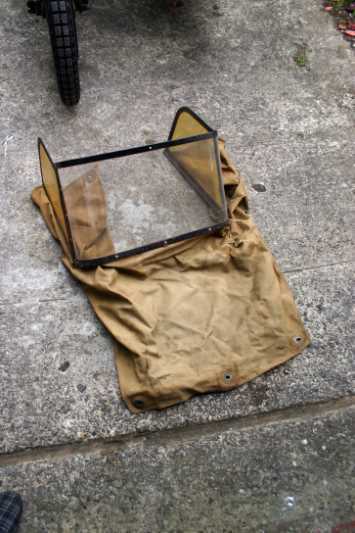
Likewise the screen attachment, that was with the bike was also in
parlous condition, so shouldn't be used.
The following year I pencilled in a few events to ride the bike in and
in the spring I had a real problem with the bike. I found that with the
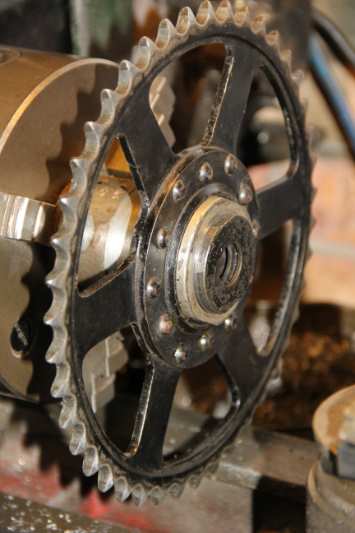
engine running and the bike in gear that it went nowhere. The rear
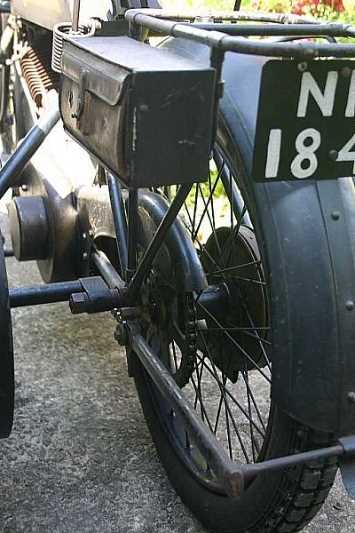
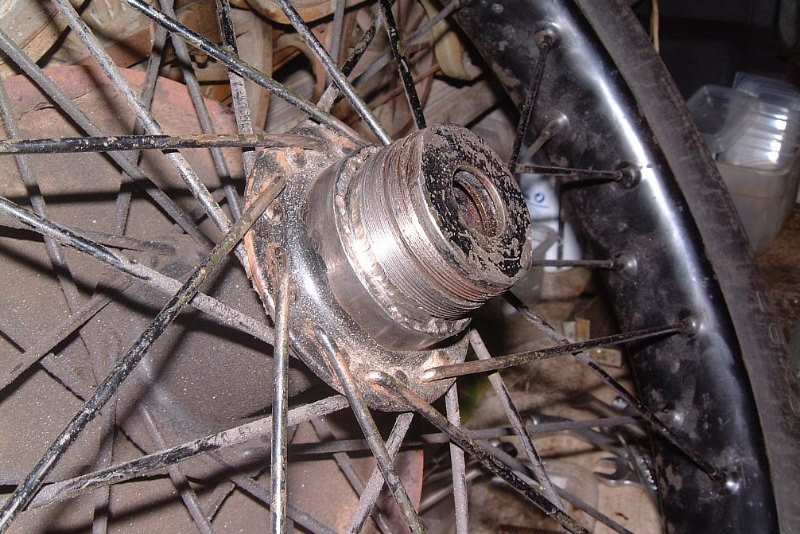
wheel sprocket was rotating but not driving the wheel. On examination I
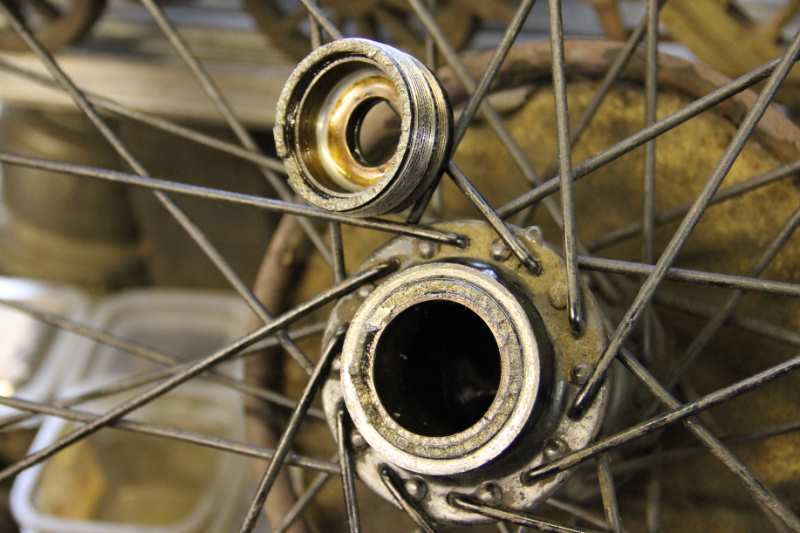
found that the hub extension, onto which the drive sprocket screwed,
had
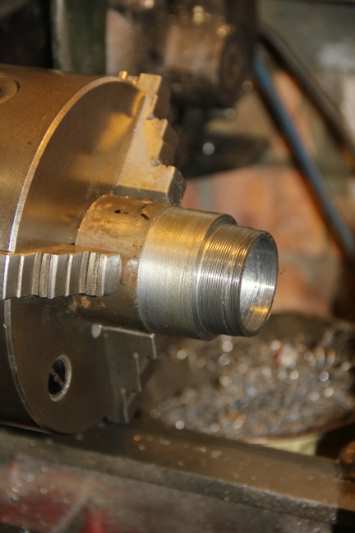
sheared off the wheel hub. It took some planning but I decided that I
could make a new fitting with a much thicker wall and then get it
welded
into the hub. There was a right hand thread and left-hand thread on the
outside for the locknut. Inside was another thread so as to adjust the
cup and cone wheel bearings. All needed to be made in the
lathe
with some careful screw cutting of the three threads. Before starting
I turned up a dummy spigot to check the clearances of the wheel spindle
etc, then I set about making the part for real.


I assume that my repair is still holding up well, as I haven't heard of
any more problems from subsequent custodianships.
The second year was pretty trouble free and the bike performed well in
the Banbury run and several other events.

A
took it to the Southern Training day and it was ridden by quite a few
entrants. With the engine running all that you needed to do was pull
the gear lever back slowly and the drive was taken up. After explaining
all that, one rider yanked
the gear lever back so hard that the front wheel lifted and the outfit
careered forward, well out of control. Luckily, the rider managed to
get it back under control, just as Ann Davy said to me that it looked
as if he'd got
all that wrong.
The time then arrived for me to pass the outfit
on to David Davies, who was to use it next. I did see David complete
the Banbury run and hope that all who've used the bike since have had
trouble
free rides.
BP